Feeds:
Posts
Comments

Posts Tagged ‘Health’

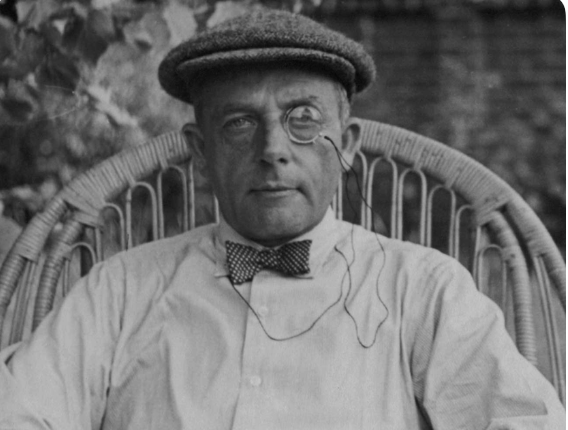
Otto Warburg published his Nobel lecture in 1931 and said, with the directness that won him the prize: 

“Cancer, above all other diseases, has countless secondary causes. But, even for cancer, there is only one prime cause.

Summarized in a few words, the prime cause of cancer is the replacement of the respiration of oxygen in normal body cells by a fermentation of sugar.”

For forty years, his work was the leading framework for understanding cancer.

Then the genetic mutation theory emerged. Oncogenes. Tumour suppressor genes. DNA damage. The molecular biology of cancer became the dominant research paradigm from the 1970s onward.

Warburg’s metabolic theory was not disproven. It was superseded by a framework that had more funding and more pharmaceutical applications.

The problem: the genetic mutation theory has driven cancer research and treatment for fifty years. The outcomes have been mixed. For some cancers: certain leukaemias, some lymphomas, targeted therapies have been transformative. For solid tumours, the majority of cancer burden, five-year survival rates have improved modestly in many cases, barely at all in others.

Meanwhile, Thomas Seyfried at Boston College has published extensively arguing that cancer’s genetic mutations are downstream of metabolic dysfunction: that the mitochondrial impairment Warburg identified is the primary event, and that the mutations are a consequence, not the cause.

His book “Cancer as a Metabolic Disease” (2012) is one of the most important unread books in oncology.

The practical implications if Seyfried and the neo-Warburgian school are right:

Starving tumours of glucose, through therapeutic ketosis, directly targets their primary metabolic vulnerability.

Providing ketones as an alternative fuel gives normal cells a metabolic advantage over cancer cells, which largely cannot use them.

The combination of caloric restriction and ketogenic diet has shown striking results in animal models.

Human case reports of tumour regression on ketogenic protocols as adjuncts to standard treatment are documented.

The therapy requires no patent.

It requires food choices.

It may be most effective in combination with standard treatment.

The research funding to test it properly has not materialised.

Nobody is getting rich from telling cancer patients to stop eating sugar and start eating beef.

The people getting rich are selling the glucose-based IV nutrition that goes into cancer patients in hospitals, the corticosteroids that raise blood glucose, and the drugs that manage the disease rather than the environment in which it thrives.

Warburg was right in 1924.

The evidence that he was right has been accumulating for a century.

The clinical application has not followed the evidence.

The clinical application follows the money.

Every time.

Source: https://x.com/SamaHoole/status/2026690777749844257?s=20 

Read Full Post »

By Deepak Chopra

Consider that the human body consists of approximately one hundred trillion cells, about one thousand cells for every bright star in the Milky Way. It takes only fifty replications, starting with the one-celled fertilized ovum, to produce those one hundred thousand billion cells.  The first replication gives you two cells. The second replication gives you four. The third replication gives you sixteen cells, and so on. By the fiftieth replication, you have one hundred thousand billion cells in your body, and that’s where the replication stops.

So all of the cells of your body start from just one cell. That one cell replicates and replicates, and somewhere along the line the cells differentiate. There are some 250 different  types of cells in the human body, from the spherical simple fat cell to the thin, branching nerve cell. Scientists still have no idea how that one cell ends up dividing into so many different kinds of cells, which then are able to organize themselves into a stomach, a brain, skin, teeth, and all the other highly specialized parts of the body.

In addition to doing its specific job in the body, each cell does a few million things per second just to keep functioning: creating proteins, adjusting the permeability of its membrane, and processing nutrients, to name just a few. Each cell also has to know what every other cell is doing otherwise your body would fall apart. The human body can function only if it is operating synchronistically, and all this can happen only through non-local correlation. How else could one hundred trillion cells each doing one millions things per second coordinate their activities so as to support a living, breathing human being? How else could a human body generate thoughts, remove toxins, and smile at a baby, or even make a baby, all at the same time?

In order to wiggle my toes, first I have the thought that I’d like to do so. The thought activates my brain cortex, which then sends a nerve impulse down through the spinal cord into my legs and moves my toes. That in itself is miraculous. Where did the thought come from? Before the thought, there was no energy, but as soon as I had the thought and the intention to wiggle my toes, it created a controlled electromagnetic storm in my brain, which transferred down the nerve, and caused it to discharge a certain chemical. Then my toes wiggled. That’s a very linear, mechanical, and local phenomenon – except for that very first part, the thought that started it all. How did the thought first create the electricity? Scientists understand the body’s mechanisms – action potential, neurotransmitters, and muscular contractions, all of it. But no one can show through experiment where the thought came from. The thought cannot be seen, but without it, we would be paralyzed. No thought, no toe-wiggling. Somehow your awareness becomes information and energy. Where does that happen?

The answer is that the thought originates in the virtual domain.

Source: The Spontaneous Fulfillment of Desire: Harnessing the Power of Coincidence by Deepak Chopra

Read Full Post »