Feeds:
Posts
Comments

Archive for the ‘Ancient Civilizations’ Category

Editor’s Note: There likely was migration much earlier in South America than the study suggests. Plus there were earlier migrations from Sundaland across the Pacific Ocean to Central and South America. It was also recently discovered that human life existed in Southern California as long ago as 130,000 years.

A new genomic study has traced what is now considered the longest known prehistoric migration: an epic movement of early Asians who, over thousands of years, traveled more than 20,000 km on foot from northern Asia to Tierra del Fuego at the southern tip of South America.

Using high-resolution DNA from 1,537 people in 139 Indigenous groups across Eurasia and the Americas, researchers reconstructed ancient ancestry patterns. The trail starts with modern humans leaving Africa, moving through the Middle East and Central Asia, and then into North Asia. From there, during the last Ice Age, some groups crossed the Bering land bridge, when Siberia and Alaska were connected by frozen steppe.

Once in the Americas, these migrants likely followed a coastal and river-valley route south. The genetic data suggest that around 14,000 years ago, a population reached the region where modern Panama meets Colombia—then a crucial funnel into South America. From this point, their descendants split into four main lineages: Amazonians, Andeans, Chaco peoples, and Patagonians, fanning out into rainforest, high mountains, dry plains, and icy fjords.

The journey demanded extreme adaptation. Groups had to cope with Arctic cold, mountain altitudes, tropical humidity, and semi-desert—all without metal tools or domesticated animals. The DNA also shows the cost of such isolation: as people pushed farther south, their genetic diversity shrank, especially in immune-related genes. That loss may help explain why some Indigenous communities were later so vulnerable to diseases brought by Europeans.

Still, the overarching story is one of resilience. Step by step, over countless generations, families carrying fire, tools, and stories walked until there was simply no more land left to discover.

Source: @Ancienthistoryexplorers
Read Full Post »

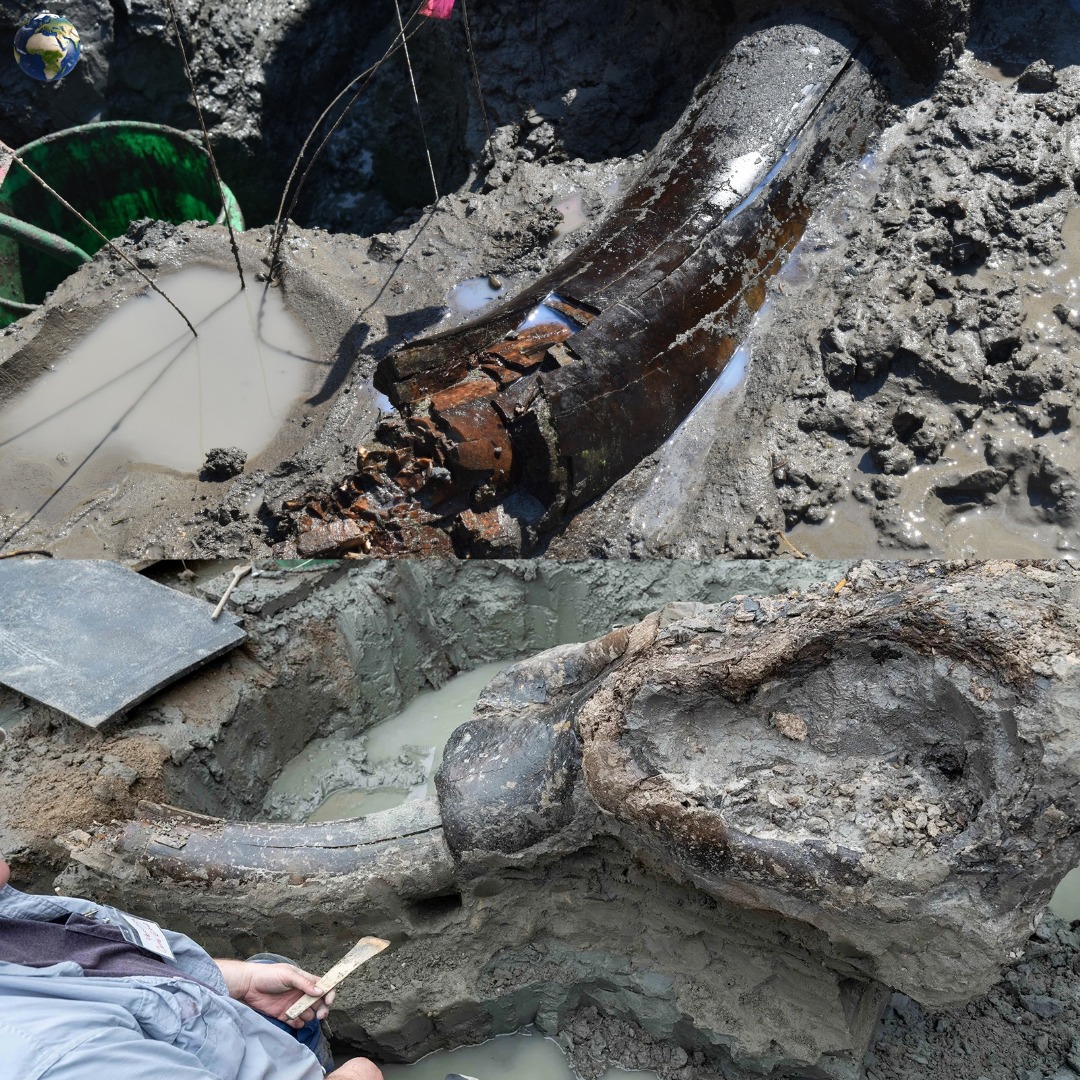
The discovery in San Diego shook archaeology to its core. A mastodon skeleton — massive, ancient, and astonishingly well-preserved, revealed evidence that should not have been there: deliberate breakage, patterned cut marks, and bones arranged in ways only intelligent hands could create. If the dating is correct, this single site places humans in North America over 130,000 years ago, nearly ten times earlier than the long-accepted timeline.

At the Cerutti Mastodon site, excavators found ribs and limb bones broken at angles consistent with stone hammering, not natural forces. Large cobbles lay beside them, battered and pitted as if used as pounding tools. No carnivore leaves marks like these. No natural process arranges bones this way. The pattern is unmistakable: something — or someone — processed this mastodon.

That “someone” challenges everything we thought we knew.

For decades, the story of the first Americans was rooted in the arrival of Clovis people around 13,000–15,000 years ago. Earlier entries into the continent seemed unlikely, unsupported by archaeological consensus. But the Cerutti findings demand a new conversation. They force researchers to consider possibilities once dismissed: earlier migrations, lost populations, or small groups of hominins whose presence left almost no other trace.

Who these early tool-users were remains a mystery. Were they early Homo sapiens? A now-vanished branch of hominins? Visitors who left only a single archaeological whisper? The evidence is still debated, but the bones are silent witnesses — and their story refuses to be ignored.

What makes this discovery so provocative is not just the age, but the sophistication implied. Breaking mastodon bones for marrow extraction or tool production requires knowledge, strength, and intention. These weren’t scavengers grabbing leftovers; they were skilled workers shaping survival in an Ice Age world.

If confirmed, the Cerutti Mastodon site expands the human timeline in the Americas by more than 100,000 years. It rewrites migration patterns. It reshapes prehistory. And it reminds us of something humbling:

Most of our past is still buried.

We’ve only just begun to uncover it.

Source: Facebook

Read Full Post »