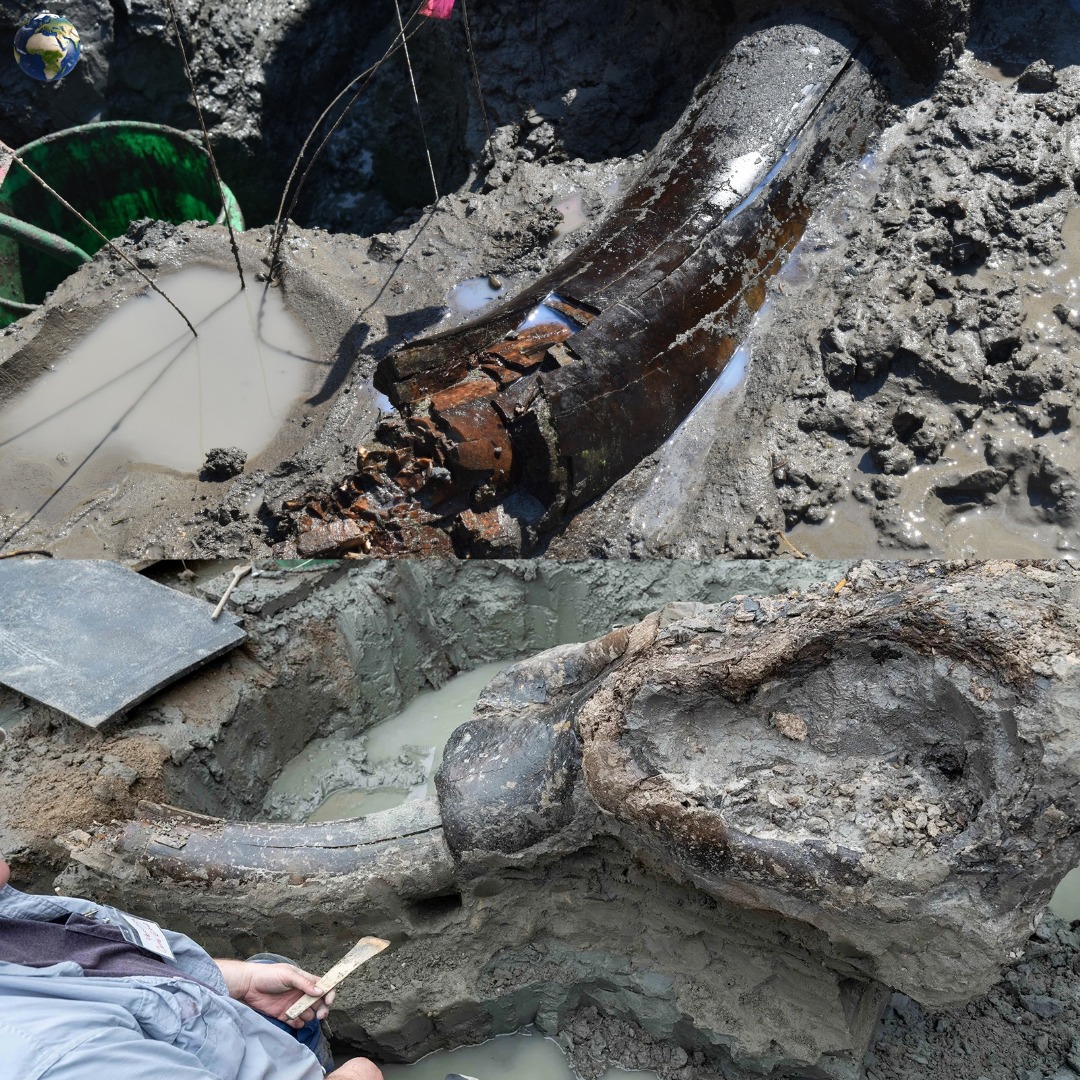
The discovery in San Diego shook archaeology to its core. A mastodon skeleton — massive, ancient, and astonishingly well-preserved, revealed evidence that should not have been there: deliberate breakage, patterned cut marks, and bones arranged in ways only intelligent hands could create. If the dating is correct, this single site places humans in North America over 130,000 years ago, nearly ten times earlier than the long-accepted timeline.
At the Cerutti Mastodon site, excavators found ribs and limb bones broken at angles consistent with stone hammering, not natural forces. Large cobbles lay beside them, battered and pitted as if used as pounding tools. No carnivore leaves marks like these. No natural process arranges bones this way. The pattern is unmistakable: something — or someone — processed this mastodon.
That “someone” challenges everything we thought we knew.
For decades, the story of the first Americans was rooted in the arrival of Clovis people around 13,000–15,000 years ago. Earlier entries into the continent seemed unlikely, unsupported by archaeological consensus. But the Cerutti findings demand a new conversation. They force researchers to consider possibilities once dismissed: earlier migrations, lost populations, or small groups of hominins whose presence left almost no other trace.
Who these early tool-users were remains a mystery. Were they early Homo sapiens? A now-vanished branch of hominins? Visitors who left only a single archaeological whisper? The evidence is still debated, but the bones are silent witnesses — and their story refuses to be ignored.
What makes this discovery so provocative is not just the age, but the sophistication implied. Breaking mastodon bones for marrow extraction or tool production requires knowledge, strength, and intention. These weren’t scavengers grabbing leftovers; they were skilled workers shaping survival in an Ice Age world.
If confirmed, the Cerutti Mastodon site expands the human timeline in the Americas by more than 100,000 years. It rewrites migration patterns. It reshapes prehistory. And it reminds us of something humbling:
Most of our past is still buried.
We’ve only just begun to uncover it.
Source: Facebook


 Waking Giant News
Leave a comment